So much of this debate is in the abstract. Texas Kaos has an affecting story about a woman who had the procedure after learning her baby had spina bifida. Read this story and then ask yourself whether you want the government making this choice instead of leaving it to a patient and her doctor.
Here is a sampling of responses to the court's decision:
U.S. Sen. Dianne Feinstein, D-Calif. -- a Judiciary Committee member who opposed confirming Roberts and Alito -- said she's "truly shocked" at "a major strike against woman's right to choose. ... This decision clearly demonstrates the real impact on privacy rights that has occurred through President Bush's efforts to nominate judges whose views are out of the mainstream of American legal thought."
House Foreign Affairs Chairman Tom Lantos, D-San Mateo, called it "the height of arrogance. The five Justices who voted to ban this procedure must believe that having `juris doctor' degrees entitles them to instruct the nation's medical professionals on patient care.
Rudy Giuliani issued a statement: "The Supreme Court reached the correct conclusion in upholding the congressional ban on partial birth abortion. I agree with it." But in 2000, Giuliani said he agreed with President Clinton's veto of the Partial-Birth Abortion Ban Act of 1997, saying then -- in response to a question about whether if he, as a senator, would have "vote[d] with the president or against the president" -- that he would have "vote[d] to preserve the option for women."
Senator Barack Obama: I strongly disagree with today’s Supreme Court ruling, which dramatically departs from previous precedents safeguarding the health of pregnant women. As Justice Ginsburg emphasized in her dissenting opinion, this ruling signals an alarming willingness on the part of the conservative majority to disregard its prior rulings respecting a woman’s medical concerns and the very personal decisions between a doctor and patient. I am extremely concerned that this ruling will embolden state legislatures to enact further measures to restrict a woman's right to choose, and that the conservative Supreme Court justices will look for other opportunities to erode Roe v. Wade, which is established federal law and a matter of equal rights for women.
John Edwards: "This hard right turn is a stark reminder of why Democrats cannot afford to lose the 2008 election. Too much is at stake -- starting with, as the court made all too clear today, a woman's right to choose."
Amy Hagstrom Miller, board chairman of the National Coalition of Abortion Providers: "There is definitely a concern that this ruling could come down and really affect procedures done as early as 12 weeks. The providers want to know that what we do is okay. We are the kind of people that comply with laws."
Ruth Bader Ginsburg: "According to the expert testimony … introduced, the safety advantages of intact D&E are marked for women with certain medical conditions, for example, uterine scarring, bleeding disorders, heart disease, or compromised immune systems......The majority's decision "cannot be understood as anything other than an effort to chip away at a right declared again and again by this court -- and with increasing comprehension of its centrality to women's lives."
Rev. Patrick J. Mahoney, Director of the Christian Defense Coalition: "Clearly, this decision paves the way for the eventual overturning of Roe v. Wade. Our hope is that the Department of Justice will move aggressively to ensure the bipartisan banning of this barbaric procedure is immediately enforced. "
Senator Sam Brownback: “I applaud the Court for finding that the constitution ‘expresses respect for the dignity of human life,’ and hope that this decision signals the Court’s willingness to revisit and reverse Roe v. Wade.”

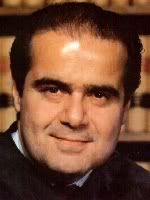 This past Thursday, Supreme Court Justice Antonin Scalia disagreed with Ginsburg's assessment, but still